
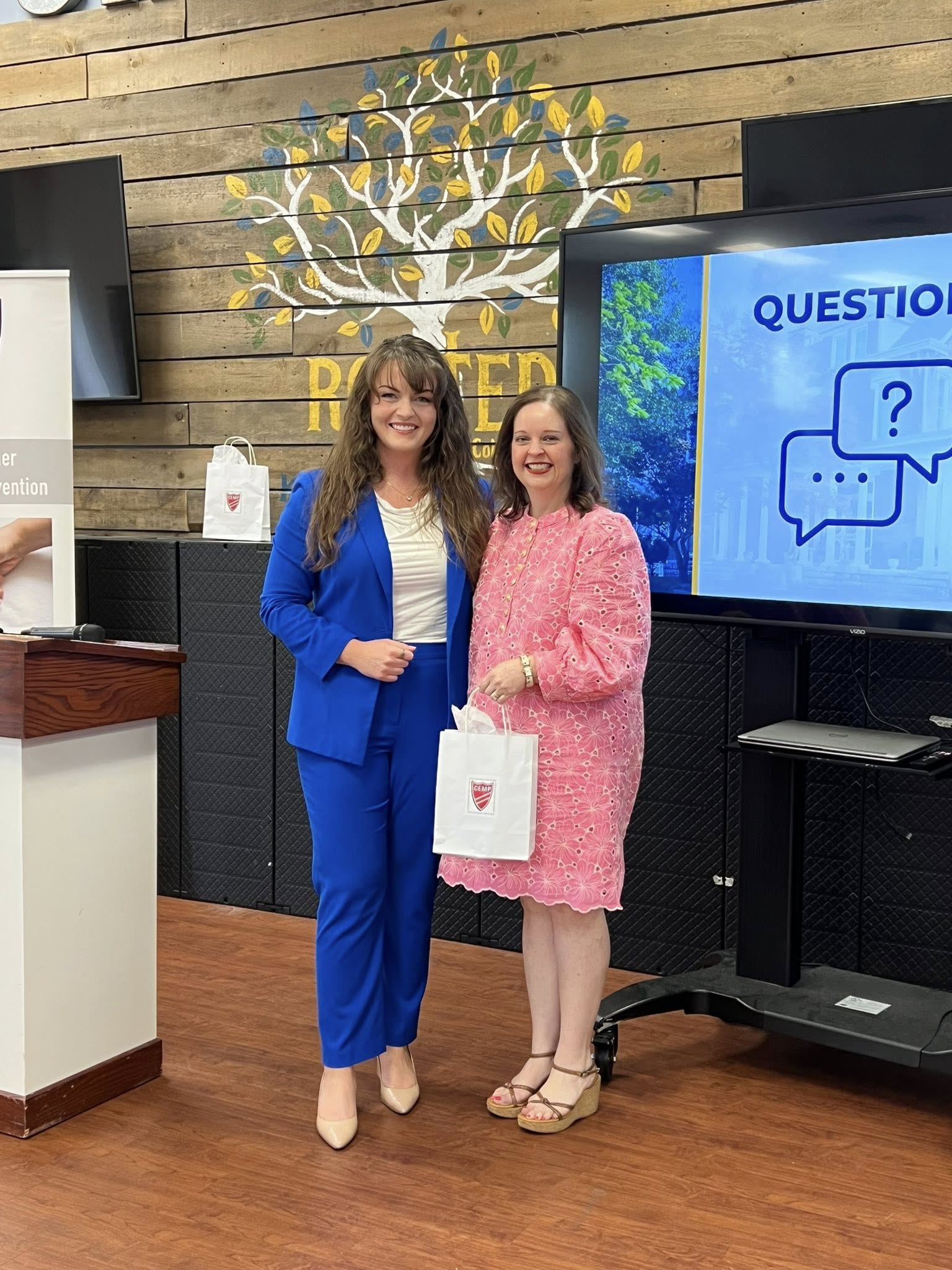
Elder Law Guidance Attorney Sarah-James Sendor recently spoke at the 2026 CEMP Spring Forum, where she presented on wills, powers of attorney, and guardianship in Kentucky.
CEMP, the Council for Elder Maltreatment Prevention, is a community-focused organization that brings together professionals, advocates, and local leaders to help prevent elder abuse, neglect, and exploitation. The Spring Forum gives attendees the opportunity to learn more about issues affecting older adults, caregivers, and families across Kentucky.
Sarah-James’ presentation, “Wills/POA/Guardianship: What is the Difference?,” gave attendees a clear look at how estate planning documents can help families prepare before a legal or medical crisis occurs.
Her presentation explained how planning ahead can reduce confusion for families, provide legal authority when someone needs help, and lower the risk of unnecessary court involvement.
Why Estate Planning Matters in Kentucky
Estate planning helps people decide who can act for them during life and what should happen to their property after death.
Many families think estate planning only means writing a will. Sarah-James explained that a complete estate plan often includes documents that apply during life, during incapacity, and after death.
These documents may answer questions such as:
- Who can make financial decisions if you cannot?
- Who can speak with doctors or make medical decisions for you?
- What should happen to your home, vehicle, bank accounts, and personal property after death?
- Who would the court look to if guardianship became necessary?
- How can your family avoid confusion during an already stressful time?
Without the right documents in place, family members may be left trying to make decisions without clear legal authority. In some cases, they may need to go through court before they can help.
What Is a Will?
A will gives written instructions for how a person wants property handled after death.
During the CEMP Spring Forum presentation, Sarah-James explained that a will can name who should receive certain assets, such as a home, vehicle, personal belongings, or other property.
A will does not avoid probate. Instead, it gives the probate court instructions about the person’s wishes.
When someone dies without a will in Kentucky, state law decides who receives property. That result may be different from what the person would have chosen.
What Is a Power of Attorney?
A power of attorney, often called a POA, gives another person legal authority to act on your behalf.
Sarah-James explained that powers of attorney are often some of the most important documents in an estate plan because they apply while a person is still alive.
A financial power of attorney can allow someone to help with money, property, bills, accounts, and legal matters. A healthcare power of attorney can allow someone to make medical decisions if the person cannot speak for themselves.
A will only applies after death. A POA can help while a person is living and needs support.
Why Powers of Attorney Can Help Avoid Guardianship
A power of attorney may reduce the need for guardianship by giving a trusted person authority to act before court involvement becomes necessary.
Guardianship is a court process. A judge must decide whether a person is legally incapacitated and whether another person should be appointed to make decisions for them.
Sarah-James explained that guardianship can be necessary in some situations, but it can also be time-consuming, stressful, and expensive for families.
When someone has powers of attorney and healthcare planning documents in place, their loved ones may already have the legal authority they need to help.
What Is Guardianship?
Guardianship is a legal process used when a person can no longer make safe decisions and does not have the proper planning documents in place.
Through guardianship, the court may appoint someone to make decisions about healthcare, finances, living arrangements, and personal care.
Because guardianship involves the court and can limit a person’s rights, it is often viewed as a last resort. Sarah-James encouraged attendees to understand guardianship before a crisis occurs, especially when helping aging parents, spouses, or loved ones with declining capacity.
What Are Advance Directives and Living Wills?
Advance directives and living wills allow a person to put medical wishes in writing before a crisis happens.
These documents can tell loved ones and medical providers what type of care a person wants in serious health situations. They may also help reduce disagreement among family members when hard decisions need to be made.
Sarah-James discussed how these documents often work alongside powers of attorney as part of a complete estate plan.
About Sarah-James Sendor
Sarah-James Sendor is an Associate Attorney at Elder Law Guidance. She joined the firm in October 2022 after serving as a Law Clerk within the firm.
A native of Flat Lick, Kentucky, Sarah-James is a first-generation college graduate and law school graduate. She graduated from Centre College in 2019 and earned her Juris Doctor from the University of Kentucky Rosenberg College of Law in May 2022.
Sarah-James brings a personal and compassionate approach to her work with clients and families.
“I realize that most of our clients come to us for help during some of the hardest times of their entire lives. I never want our clients to feel alone in what they are going through,” said Sarah-James. “I love working at Elder Law Guidance because I am encouraged to be the best version of myself. I am able to connect with clients on a personal and human level.”
Watch Sarah-James Sendor’s CEMP Spring Forum Presentation
Sarah-James’ full presentation from the 2026 CEMP Spring Forum is available here:

For Kentucky families who are unsure whether they have the right estate planning documents in place, this presentation is a helpful place to start. It explains the role of wills, powers of attorney, advance directives, and guardianship in a way that can help families feel more prepared.
Estate Planning Help in Kentucky
Elder Law Guidance helps Kentucky families plan for incapacity, long-term care, asset protection, probate, guardianship, Medicaid planning, veterans’ benefits, and estate planning.
If you have questions about wills, powers of attorney, guardianship, or planning for an aging loved one, Elder Law Guidance can help you understand your options.
Visit ElderLawGuidance.com or call (859) 340-5953 to learn more.